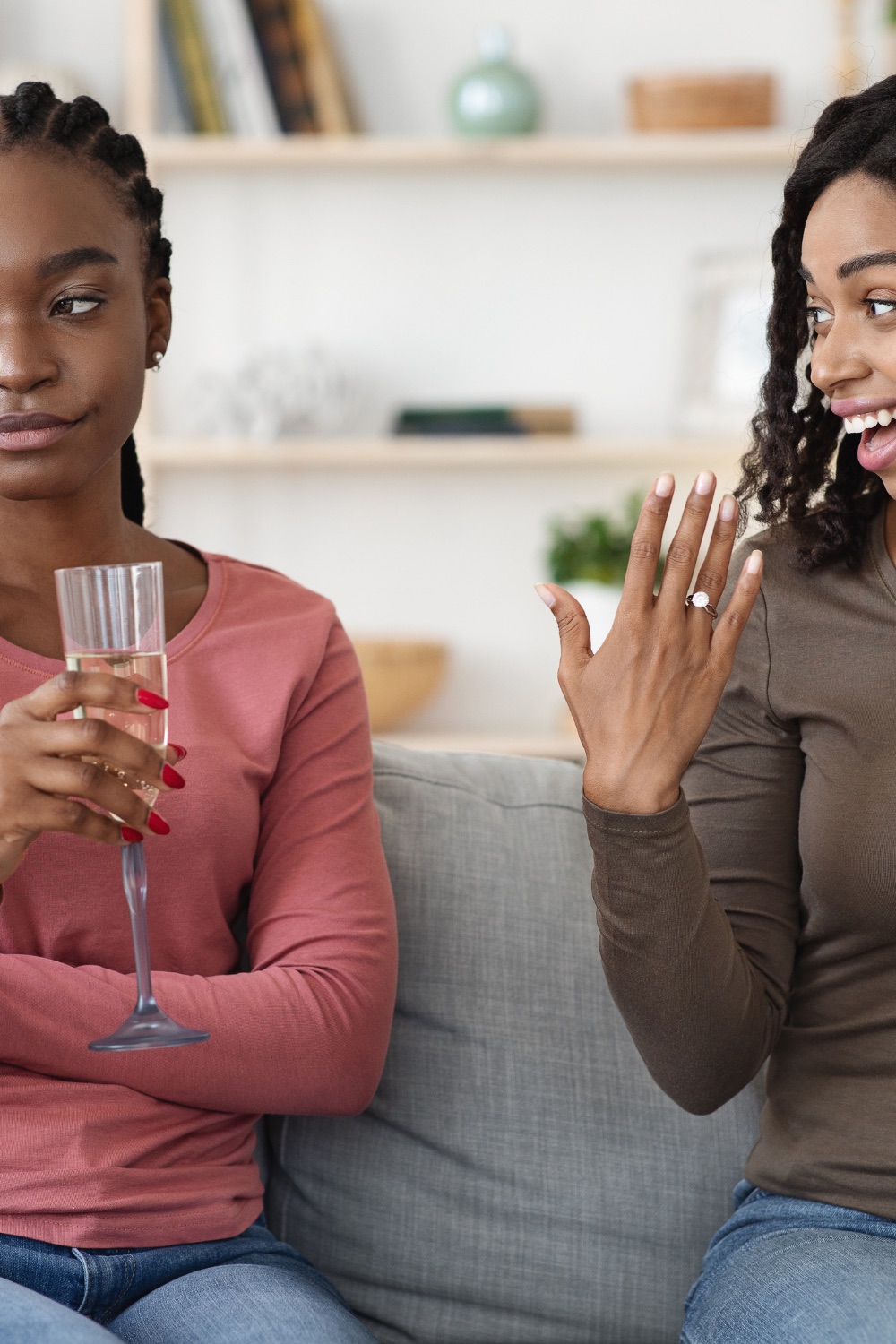
Female friendships are often portrayed in popular culture as the epitome of unconditional love and support, with women as a steadfast fixture during the hardships of life. While this may be true for many, female friendships can also be a source of anxiety for some women. In fact, studies have shown that women who have close female friendships are more likely to experience anxiety than those who don’t. With jaws agape, let’s explore the “why”.
Reason #1: The emotional investment of female friendships may cause anxiety.
Research tells us that women integrate friends into their lives as “siblings”, while men integrate them as “cousins”. We also tend to be deeply affected by our friends’ distress. This can lead to facing anxiousness and overwhelm if not managed properly.
One solution could be to be discerning about who you bring into your life, and to differentiate between what is (and isn’t) within your control when supporting your friends.
Reason #2: Women have higher expectations than men when it comes to platonic (and romantic!) relationships.
With most great friendships comes some level of expectation, and expectation can easily lead to undue pressure, which brings us to the first connection between anxiety and friendship. Research by Anna Machin reveals an imbalance in the way that men and women respond to unmet expectations in their relationships.
The pressure, be it large or small, that women feel to maintain their friendships can easily be converted to anxiety. Women are socialized to prioritize relationships and often place a lot of value on the quality of their friendships. This can lead to anxiety if they feel that they’re not doing enough to maintain those relationships or if they feel that their friends aren’t reciprocating their efforts.
Anxiety is as common reaction to fear, so if we fear we are insufficient in our friendship, we can easily jump to conclusions and create scenarios in our heads that are not based on reality. Often, we allow our past experiences to fuel our fears and create the anxiety that becomes destructive in our friendship.
Reason #3: Female friendships can lead to the “comparison trap”.
Surely, you have had the, “What do I wear?” moment when dressing for a girl’s night out with your fashionista model friend.
Society’s norms strike once again molding women to compare themselves to others. If a woman perceives her friends as more successful or more socially adept than she is, she may feel anxious about her own standing in the group. This can lead to a cycle of self-doubt and anxiety that can be difficult to break out of. Or maybe you can relate to the woman who feels the pressure to always be “on” at social events. The unspoken pressure of having the success of the party riding on your shoulders is a very real one, and a very overwhelming one that often leads to unnecessary anxiety.
Interestingly, research has shown that the types of friendships that women have can also play a role in their anxiety levels. Women who have “clingy” or codependent friendships are more likely to experience anxiety than those who have more independent friendships. This may be because codependent friendships can be emotionally draining, leaving women feeling like they have to constantly be there for their friends at the expense of their own mental health. And it should go without saying, but your mental health should always be a priority, even if it means letting go of a friend who holds on too tightly.

Are all female friendships like this?
On the flip side, it’s important to note that not all female friendships are anxiety-inducing. In fact, many women find that their friendships provide a sense of comfort and support that helps them cope with anxiety. However, it’s important to recognize that friendships can also be a source of stress and anxiety, and to take steps to mitigate those feelings when they arise.
One way to do this is to set healthy boundaries in your friendships. This might mean saying “no” to plans or activities that you don’t feel up to in that moment or taking a break from a friend who is particularly draining. If you are feeling the demands of motherhood coming down on you, it’s okay to back away from social outings for a bit until you get your feet back under you. It can also mean being honest with your friends about your own mental health struggles and asking for their support when you need it. Friendships work both ways- don’t forget that.
Another strategy is to focus on building a diverse range of relationships. While close friendships can be important, it’s also helpful to have a variety of social connections to rely on. This might include acquaintances, colleagues, or family members who you can turn to for support when you need it. Variation helps with compartmentalization, and sometimes that is just what is needed to flourish in your friendships.
The connection between female friends and anxiety is a complex one with many different factors at play. While some women may find that their friendships exacerbate their anxiety, others may find that their friendships provide a valuable source of support, love, and comfort. The key is to be mindful of your own needs and boundaries, and to take steps to prioritize your own mental health in all of your relationships.
Want the full list?
We’re sharing two more links between female friendship and anxiety in our private Friend Forward Group Chat. Join today.
In the meantime, watch this video to explore the many benefits of female friendship.